





There is no age at which you're supposed to dial down your style. The “tone it down now” rule is just a habit sold to us & we absolutely recommend you break it.
There is no age at which you're supposed to dial down your style. The “tone it down now” rule is just a habit sold to us & we absolutely recommend you break it.
Somewhere around your fiftieth birthday, a memo arrives that nobody signed and everybody obeys. You won't find it in writing — you'll find it in the shop assistant steering you toward the “sophisticated” frame, in the catalogue that trades colour for tasteful greys, in the creeping sense that a rule got passed while you were busy living. It says: turn the volume down now. Speak softer, dress calmer, want less, take up less room.
Plenty of people obey it without noticing they agreed to anything. But it's worth asking who wrote the thing — because once you know where it came from, it loses its grip, and getting your style back is more straightforward than it looks.
Where did the “tone it down” rule actually come from?
Follow the money. Someone who has decided to fade is a wonderful customer for beige things — the safe cardigan, the forgettable frame, the sensible everything. Over time “age-appropriate” slid into meaning “please don't be seen,” and a whole industry learned to sell calm, agreeable invisibility back to the people with the most reason to be vivid. The rule was never handed down as wisdom. It was marketing with good manners, and it works because it flatters us into thinking that disappearing is the same thing as maturing.
It isn't. Fading is a choice dressed up as growing up.
Why visibility isn't rationed by age
Picture anyone you've genuinely found magnetic at seventy. They weren't melting into the wallpaper. They had a signature — a red coat, a laugh you could hear across a restaurant, a pair of glasses you could sketch from memory. That's not a coincidence; it's the whole mechanism. The people who stay vivid are the ones who kept one thing that was unmistakably theirs. Confidence and taste don't expire at fifty.
For most people they finally arrive; you know what you like, you've stopped auditioning, and you can walk into a room as exactly who you are.
How to stop whispering: four moves
1. Pick a signature
Choose one element that's reliably, recognizably yours — a color, a shape, a material — and repeat it. A signature is what turns “nicely dressed” into “unmistakably you.” It does the heavy lifting so the rest of your outfit can stay simple.
2. Start at your face
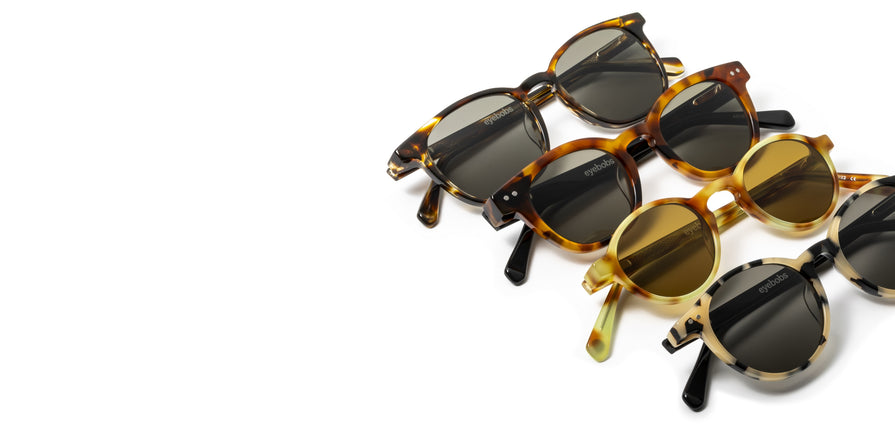
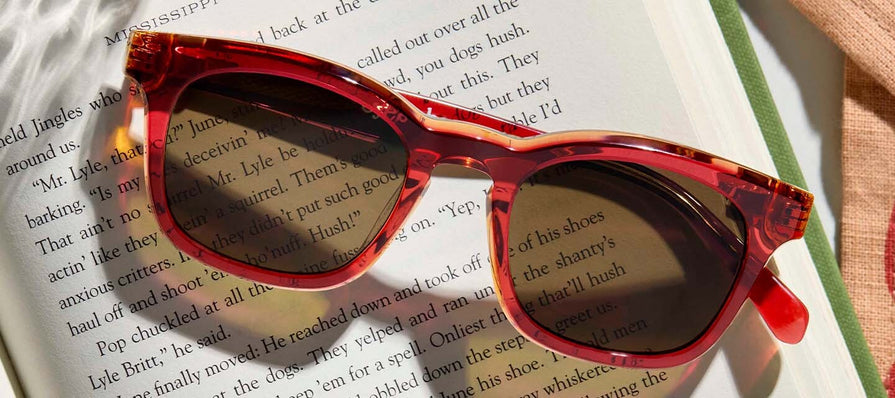
Your glasses sit dead-center on the most-looked-at part of you, worn every waking hour. That makes them the highest-leverage change you can make — swap an invisible frame for one with a bit of nerve and you've shifted the whole impression before you've touched anything else in the wardrobe.


3. Choose “memorable” over “timeless”
“Timeless” is usually code for forgettable-on-a-longer-schedule. You don't need every piece to shout — you need one clear anchor per outfit that someone could describe afterwards. One bold thing, worn with confidence, reads as decisive, not eccentric.
4. Use the “there I am” test
In the mirror, the right choice makes you think there I am — a small click of recognition. The forgettable choice makes you think nothing at all. Buy the click. It's the most reliable style instinct you own, and it gets sharper with age, not duller.
The takeaways
- There's no age at which you're meant to tone down — “dress your age” is sold, not true.
- A signature (one repeated color, shape, or material) is what makes a look unmistakably yours.
- Glasses are the highest-leverage change because they're the most-seen, most-worn thing you own.
- Aim for one memorable anchor per outfit, and trust the “there I am” click in the mirror.
Related reading: Best Eyeglass Frames for Women Over 50 · Best Eyeglass Frames for Men Over 50
Frequently Asked Questions
-
There isn't one. Toning down with age is a cultural habit, not a rule of taste — confidence and a clear point of view read well at any age. The goal is to dress like yourself, not younger or “quieter.”
-
Pick a signature element you return to (a color, a shape, a frame style), build simple outfits around that one anchor, and use the “does this look like me?” test rather than “is this age-appropriate?”
-
No — a well-fitted, well-made bold frame reads as confident and intentional. Because glasses are worn daily on the most visible part of your face, a frame with personality is one of the most flattering, highest-impact choices you can make.
Ready to stop whispering? Find the frame that says “there I am” →
Ready to stop whispering? Find the frame that says “there I am” →